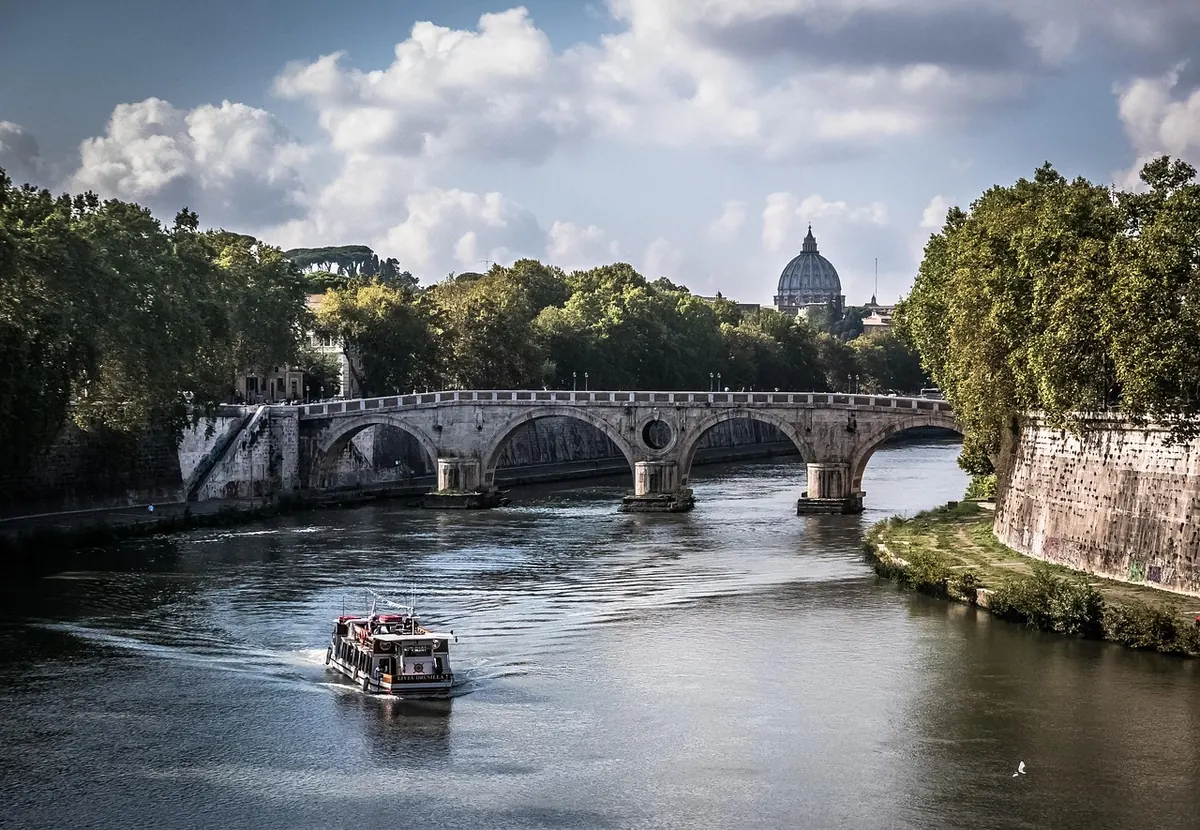
Truss vs. Arch Bridges: How to Tell Them Apart and When Each Works Best
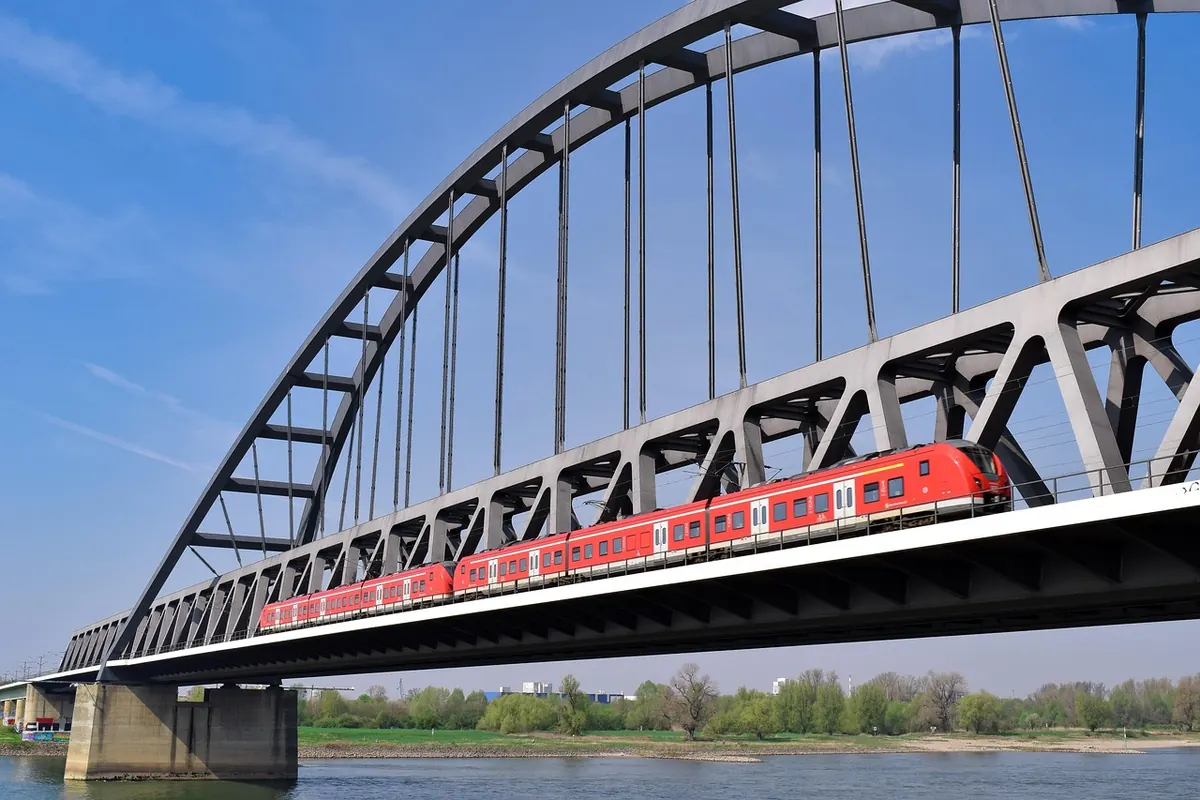
Two bridges, same river, a few hundred metres apart. One is a cage of triangles; the other rises in a single unhurried curve. Both carry traffic, both are safe, and both cost somebody a great deal of money. Yet the way they hold up the road under your feet has almost nothing in common. Learning to read that difference turns a bridge from scenery into a piece of engineering you can actually follow.
The Core Difference: Triangles Versus a Curve
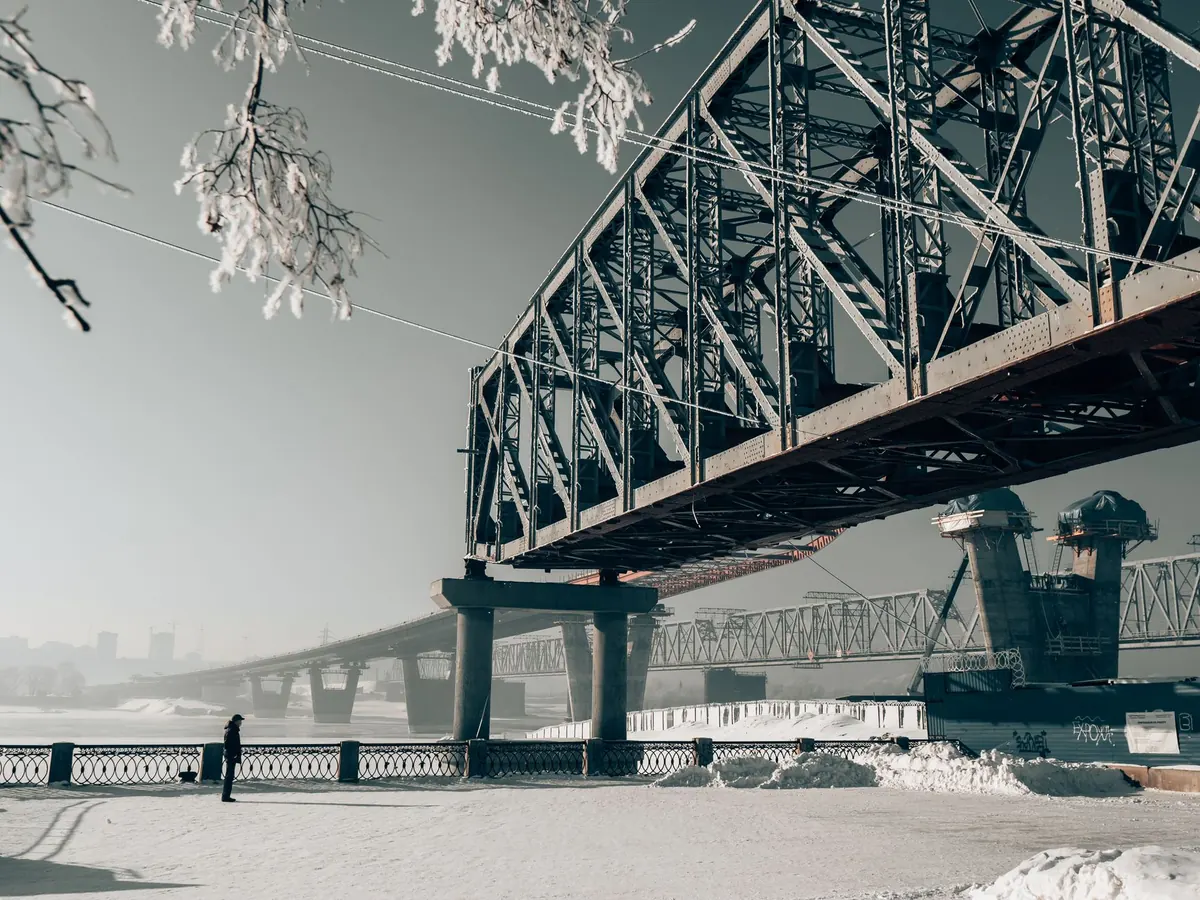
A truss bridge carries its load through a framework of straight members joined into triangles. Gravity pulls the deck down, and the truss redistributes that load so that individual members mostly pull (tension) or push (compression) along their own length. The triangles keep the shape from collapsing, so the members barely bend at all. What gives a truss its stiffness is its depth — the vertical distance between the top and bottom chords.
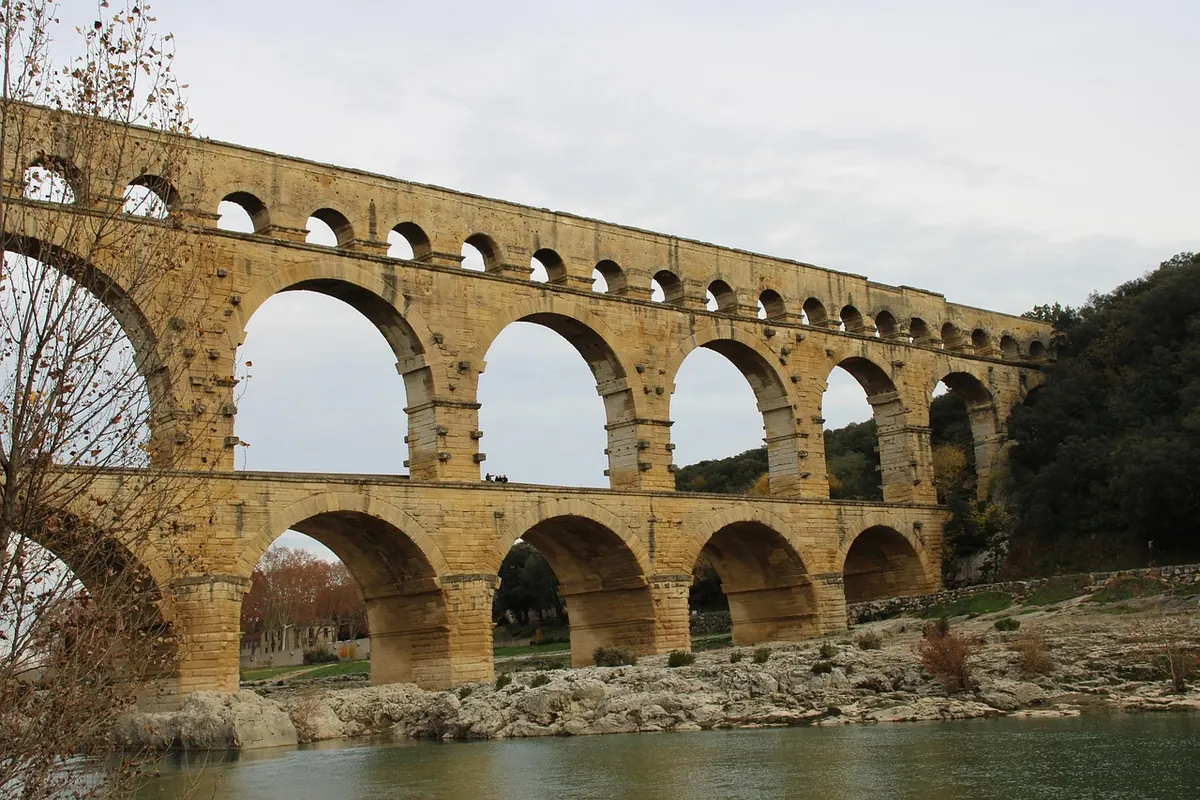
An arch works on a different principle entirely. It takes the load and funnels it along a curved path in compression, then hands it off at each end as a thrust that is part downward, part outward. That outward push is the arch's signature, and its main constraint: the ground, the abutments, or a tension tie has to be able to resist it.
Put simply, a truss is a frame that keeps its members straight; an arch is a shape that keeps its material squeezed.
Visual Clues You Can Spot From the Bank
The silhouette
Trace the top edge with your eye. If it is a chain of straight lines meeting at angles, you are almost certainly looking at a truss. If it is one continuous curve, or a series of curves springing from piers, you are looking at an arch. The rare confusing case is a truss with a curved or polygonal top chord — a Parker truss, for instance — but even then the diagonals and verticals inside the frame give it away.
Where the deck sits
Deck position is the quickest vocabulary to learn. A deck truss has the roadway sitting on top of the framework. A through truss has the roadway passing between two tall trusses, with overhead bracing connecting them — you drive through a tunnel of steel. A pony truss is the low version, with no overhead bracing, common on rural crossings. Arches follow the same logic: a deck arch carries the road above the curve, while a through arch, like Sydney Harbour Bridge, lets the arch ribs rise above the roadway and hang the deck from them.
Joints, plates and hangers
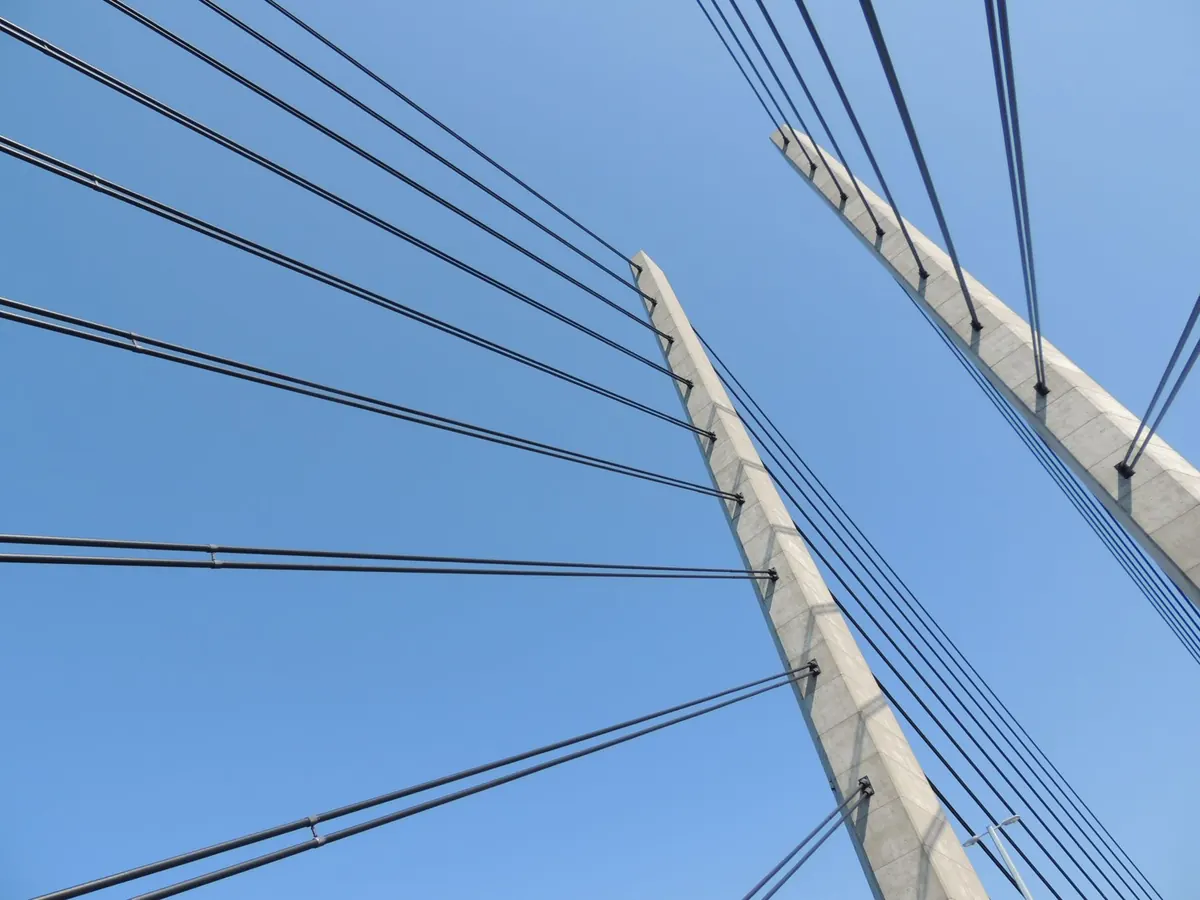
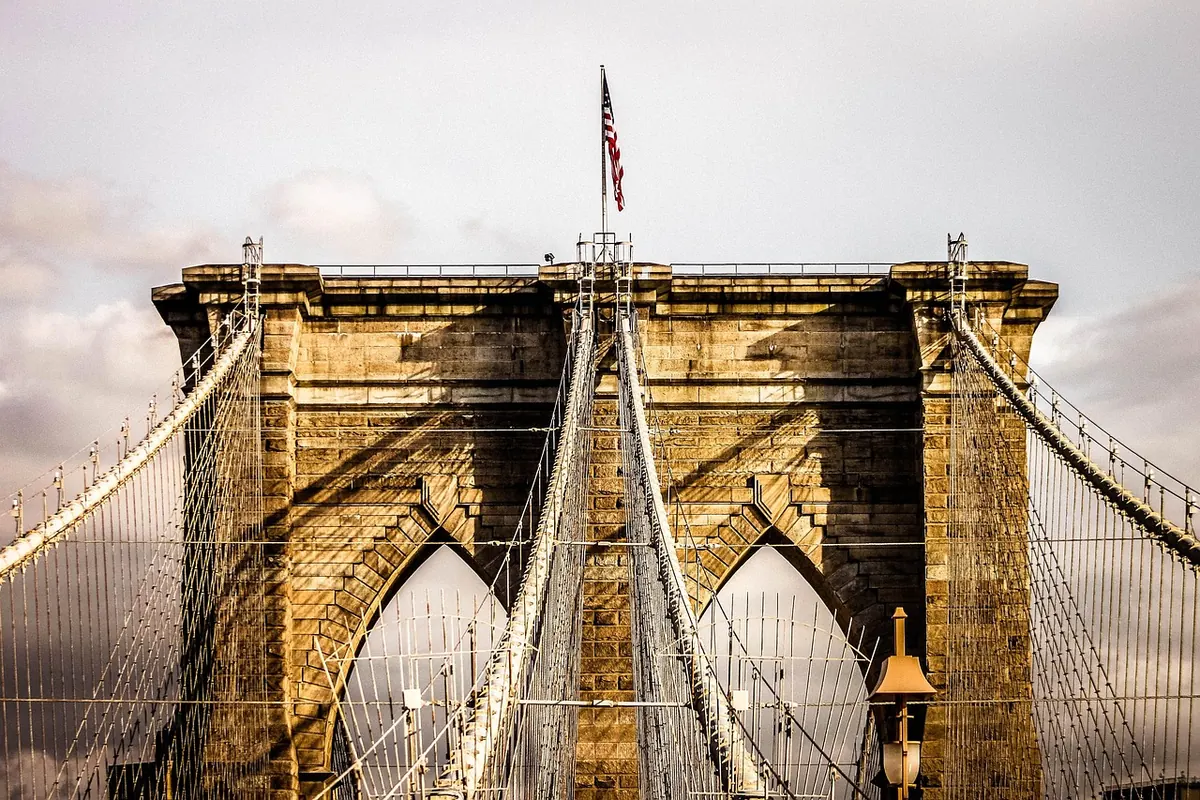
Get close enough and the details are decisive. Trusses are full of repetition: gusset plates, rivets or bolts, and dozens of near-identical members. Arches show a continuous rib, often a deep box section, and — in through arches — slender vertical cables or rods called hangers dropping to the deck. If you see a horizontal member at deck level connecting the two ends of an arch, you are looking at a tied arch, sometimes called a bowstring.
Reading the Members Without Doing Any Maths
You do not need calculations to notice how a truss is arranged, and the arrangement tells you something about its era and its designer. In a Pratt truss, the diagonals lean in towards the centre and the verticals sit in compression; it was the standard American railroad truss for decades. A Howe truss flips that pattern, with diagonals leaning outward, which made sense in timber. A Warren truss uses alternating equilateral triangles and no verticals at all, giving the even zigzag you see on countless modern highway bridges.
Arches are simpler to read but harder to judge. The questions worth asking are about the ends. Does the arch spring from solid rock, a massive concrete abutment, or a pile of masonry? Is there a tie rod doing the work instead? A tied arch transfers the horizontal thrust into its own tie, which means it can sit on ground that would never hold a classical masonry arch — but it also means the tie and the hangers become things to inspect and maintain.
Span, Cost and Site: Where Each Type Wins
The choice between the two is rarely about elegance alone. It comes down to ground conditions, span, clearance and how the thing gets built.
- Ground conditions. Arches need something to push against. On soft alluvium, or where the approach embankments are already struggling, that outward thrust becomes expensive to resist. Trusses deliver their load downwards to bearings and are far more forgiving of poor foundations.
- Span range. Trusses are economical over short and medium spans and can be made continuous across several piers, which suits long viaducts. Arches come into their own as spans grow, because compression is an efficient way to move large loads through steel, concrete or stone.
- Structural depth. A truss needs depth to work, and that depth has to go somewhere — under the deck, above it, or both. Arches can be shallower overall, but a through arch needs vertical clearance above the roadway, which is awkward under airports or low bridges.
- Erection. Straight, repetitive members are easy to fabricate in a shop, ship, and assemble. Trusses can also be built out cantilever-fashion over water or a live railway without temporary supports underneath — the reason so many rail crossings are trusses.
- Maintenance. A truss has many members and many joints, which means many places for water to sit and paint to fail. An arch has fewer members but concentrates force at its foundations, and a tied arch adds hangers that need regular inspection.
- Appearance. Be honest about this one. Arches read as civic gestures and are often chosen for that reason. Trusses read as work, which is either a virtue or a problem depending on the client.
Look-Alikes and Hybrids That Confuse People
Plenty of bridges refuse to sit in either category. The Eads Bridge at St. Louis uses steel arch ribs braced by a truss-like superstructure. Bowstring arches are arches with a truss's habit of resolving horizontal force internally. Cantilever trusses, such as the Forth Bridge, look nothing like a simple triangle cage but are trusses all the same, balanced over their towers. And a cast-iron or steel arch can be clad in stone or concrete, hiding the structural logic completely.
The useful habit is to ask what the primary load path is. If the main action is a curved rib in compression, it is an arch, whatever else is bolted to it. If the main action is a triangulated frame delivering vertical reactions, it is a truss.
A Quick Field Checklist
- Trace the top edge: straight segments or one smooth curve?
- Find the ends: does the structure push outward into abutments, or sit down on bearings?
- Look inside the frame: triangles and diagonals mean truss; a continuous rib means arch.
- Note the deck: above, through, or below the main structure?
- Check for a horizontal tie joining the arch ends at deck level.
- Ask whether the curve is structural or just cladding over a straight frame.
Practical Takeaways
For anyone who simply wants to read a bridge in thirty seconds, start with the silhouette and the ends. A curved rib pushing outward is an arch; a lattice of triangles standing on bearings is a truss. Everything else — deck position, hangers, ties, bracing — refines the answer.
If you are briefing a design team rather than admiring someone else's work, the questions that matter are less romantic. What is the ground like at each abutment, and can it take thrust? What span has to be crossed without temporary supports in the water or over the railway? Where can structural depth be hidden? Who will inspect the joints, the hangers and the bearings for the next eighty years? Answer those honestly and the choice between truss and arch usually makes itself. For an actual project, of course, leave the final call to a qualified structural engineer with the site investigation in front of them — the diagrams in a magazine are no substitute for borehole data.
Photo: 652234 / Pixabay